
Table of Contents
A world seafood sourcing mission to South Africa has recognized each export-ready potential and key compliance gaps amongst Japanese Cape producers searching for entry into the European Union market.
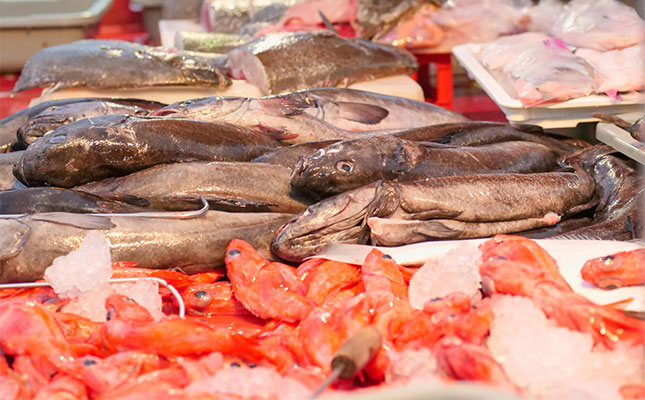
South Africa’s winter harvest meets Europe’s summer time demand, creating a main window for contemporary seafood exports. Picture: Octavia Avesca Spandiel
– ADVERTISEMENT –
The delegation comprised Linda Lubengu, commerce promotion specialist on the Japanese Cape Improvement Company (ECDC), and Lea Reinhardt, exports sourcing and market specialist, and Udo Censkowsky, guide, from the Import Promotion Desk in Bonn, Germany. In mid-February, they visited two seafood farms within the OR Tambo District Municipality, one in Mtakatyi and the opposite in Port St Johns.
The Japanese Cape leg of the go to concluded with visits to Letishing South Africa in Deal Social gathering and the Rial Fishing Firm in Walmer within the Nelson Mandela Bay Metropolitan Municipality, the place export capability and processing upgrades have been assessed.
Compliance gaps are a significant hurdle
Chatting with Farmer’s Weekly, Lubengu mentioned entry to the EU market hinges on strict adherence to sanitary and phytosanitary (SPS) requirements and formalised high quality programs.
“To entry the EU market, producers should meet strict EU SPS requirements, together with Hazard Evaluation Important Management Factors [HACCP], and traceability from catch or harvest by way of to processing and packaging.
“Many [small, medium, and micro enterprises] within the Japanese Cape lack a formalised high quality assurance system that’s absolutely aligned with EU necessities,” she defined.
She added that processing capability constraints additional complicate export ambitions.
“Processing capability to deal with peak volumes whereas preserving high quality can be a problem. Producers typically cite delays in certification approval, unclear steerage on export protocols, and restricted assist to navigate EU regulatory frameworks.”
Lubengu mentioned these gaps are usually not insurmountable however require coordinated technical and regulatory assist.
“The ECDC offers a spread of hands-on, sensible interventions to assist rising producers bridge technical, regulatory, and market-readiness gaps, significantly for high-bar exports. This assist goes nicely past monetary help,” she defined.
In accordance with her, export readiness coaching is central to this method: “The ECDC often organises coaching periods, masterclasses, and workshops in collaboration with programmes such because the EU-Southern African Improvement Group Financial Partnership Settlement assist programme; the Division of Commerce, Trade and Competitors German Supervisor Programme, and the Swiss Import Promotion Programme.
“These periods give attention to EU regulatory necessities, together with SPS requirements, high quality and security compliance, documentation, certification, and export procedures.”
Lubengu confirmed {that a} devoted EU-focused masterclass is scheduled for 18 March. “This masterclass goals to offer an replace on regulatory necessities and improve the capability of producers excited by accessing the EU market. It’ll equip producers with the data and instruments to know and implement EU necessities earlier than they export.”
The ECDC’s Path to Market Entry Fund additionally assists with certification and compliance prices.
“Whereas funding could also be a part of certification processes, the ECDC helps producers determine which worldwide product certifications are wanted, hyperlinks them to certifying our bodies or technical companions, and guides them on documentation and compliance necessities,” she defined.
Infrastructure revival in port ST Johns
Duncan Sejoeseng, managing director of Rekaseed a seafood enterprise, informed Farmer’s Weekly that compliance certification is the rapid precedence for Port St Johns fishing co-operatives searching for entry to the EU market.
“Most vital are HACCP and Nationwide Regulator for Obligatory Specs certifications, which we’re presently engaged on, together with the method of making use of for an export allow,” he mentioned.
He added that infrastructure funding from ECDC are already starting to shift the trajectory for seven native fishing co-operatives.
“Port St Johns has a really excessive unemployment price, and the fishing co-operatives rely totally on fishing, with east coast rock lobster as considered one of their most important sources of earnings,” he mentioned.
He defined that a number of years in the past, communities have been successfully locked out of the market. “Between 2020 and 2023, earlier than Rekaseed got here to the world, the communities had not offered their lobster. There was no market, and patrons have been unwilling to remain within the space as a consequence of infrastructure and market challenges.
“Up to now two years, Rekaseed has been targeted on reviving the marketplace for east coast rock lobster, and an funding in infrastructure has allowed us to do that effectively. It offers stability and permits us to provide a high-quality product.”
Past business returns, Sejoeseng mentioned the social influence has been tangible: “The present [seafood sourcing] mission has been efficient in growing employment alternatives within the space. We prioritise locality in employment and supply informal work alternatives for the youth.
“This has enabled extra youngsters to attend college who have been beforehand held again by monetary restrictions.”
Regulatory misalignment constrains development
Trevor Web page, operations director at Phumalali Seafoods, mentioned regulatory bottlenecks stay a significant barrier to sustainable development on the Wild Coast.
“The approval of multi-species permits by the Division of Forestry, Fisheries and the Atmosphere is essential for the sustainability and development of small-scale fishing operations on the Wild Coast, as a result of totally different fishers have totally different abilities and goal totally different species,” he defined.
“Every species requires particular data, methods, and tools. If permits are restricted to 1 species, reminiscent of lobster, fishers who’re expert in harvesting different species are excluded, limiting their capability to earn a livelihood.”
He additionally warned of ecological dangers: “If fishers are restricted to catching solely lobster to satisfy their quotas, it could actually result in overexploitation and threaten the long-term sustainability of that species.
“Multi-species permits enable fishing efforts to be unfold throughout totally different species, decreasing strain on anybody inventory and selling extra balanced, sustainable useful resource use.”
Web page mentioned a disconnect between long-term fishing rights and allow issuance has created uncertainty.
“Small-scale fishing co-operatives have been granted 15-year multi-species fishing rights; nonetheless, the related permits haven’t but been issued over the previous two years. This misalignment has created important operational uncertainty and constrained the co-operatives’ capability to completely take part within the trade,” he defined.
🌾 Loved this text?
Get trusted farming information from Farmers Weekly in Google High Tales.
➕ Add Farmers Weekly to Google
✔ Takes 10 seconds · ✔ Take away anytime
