
Table of Contents
Karachi, Pakistan – As rain and thunder threatened to disrupt their team’s T20 World Cup match against India on Sunday, Pakistan’s cricket fans are bracing for a different storm – the now-customary loss against their archrivals at global events.
Pakistan have not beaten India in the tournament since 2021 when they recorded a solitary win in eight T20 World Cup encounters against their formidable opponents.
Recommended Stories
list of 4 itemsend of list
Despondent fans have now shifted from anticipating a thrilling, unpredictable game to praying for a miracle as Salman Ali Agha’s team step on the field at the R Premadasa Stadium in Colombo, Sri Lanka.
Pakistan’s latest “win” came in the form of a move to boycott the match on political grounds. Despite the eventual reversal of the decision after weeklong negotiations with the International Cricket Council (ICC), the initial decision to not take the field against India was seen as a triumph by cricket fans in Pakistan.
Despondent or optimistic, fans still eager for match
Escalating political tensions between the South Asian neighbours have seen a decades-old sporting rivalry turn into an ugly debacle both on and off the pitch with customary handshakes avoided and light jibes replaced by controversial hand gestures invoking their most recent armed conflict in May.
Politics and sport blur boundaries on both sides of the border, making these fixtures an exhibition of nationalistic pride that can sometimes turn distasteful.
The pre-match jingoism in Pakistan, though, was short-lived. It has been replaced by bitterly disappointed fans airing their thoughts in the form of self-deprecating memes or reels depicting the “foolishness” of a section of fans expecting a win.
“We’ll have heartbreak on February 14 and 15,” read the captions of several social media posts set to melancholic songs on Valentine’s Day, the eve of the match.
Supporters – both hardcore and casual – will religiously watch the three-plus-hour encounters. Come 6:30pm (13:30 GMT) on Sunday, the public will be glued to screens across the country to watch the high-stakes match.
Roadside tea stalls will be thronged by male spectators filling up wooden benches, plastic chairs or squatting on their haunches in front of small TV screens.
Food delivery riders busy with an overflow of match-day meal orders will occasionally halt their journeys to catch a glimpse of the action on their phones or through restaurant windows.
Upscale eateries will bring in large screens and host groups of young fans and families.
Domestic responsibilities will be wrapped up before the start of the match, and extended families will gather around a living room TV with drinks, snacks and feasts of biryani.
The weekend – now the standard time that all India-Pakistan matches are played for economic and logistical reasons – will offer some respite from an otherwise hectic schedule of school and office routines that throw the heaving metropolis of Karachi into transport turbulence.
Cricket fans in Pakistan always find a way to catch the action when their team takes on India [File: Fayaz Aziz/Reuters]
India favourites, but Usman Tariq could spin a win
Despite the days of anticipation and hours spent preparing for the showpiece, fans remain realistic in their expectations.
On a balmy late Friday afternoon in Karachi as life gradually returned to its normal pace after an hour-long pause for midday prayers at mosques across the city, a group of young law students picked up their kits for a local league match.
“It’s looking 70-30 in India’s favour,” Talha Bandayal, a law student, told Al Jazeera as he watched his teammates play a cricket match in their local lawyers league at the historic Karachi Parsi Institute on Friday.
Bandayal and his friends plan to watch the match at a restaurant in one of Karachi’s posh localities.
“It’s a Pakistan-India match. We’re excited regardless of the result!”
Syed Ahmed Shah, who officiated the league match as a third umpire, was more sceptical of the team’s chances and more in tune with the country’s overall opinion of Pakistan’s expected performance.
“Sport is just like politics in our country,” a bespectacled Shah opined dryly to everyone’s amusement, drawing comparisons between the nation’s two most favoured topics.
“India is far superior to us, not just in cricket but everything,” Shah told Al Jazeera.
Cricket analysts have appeared on national talk shows throughout the week, dissecting the team’s shortcomings, the Pakistan Cricket Board’s organisational failures and the squad’s weak mental fortitude for a match of this proportion.
Local cricketers like Bandayal have been analysing Pakistani players’ strengths and weaknesses. Usman Tariq’s unreadable spin action and variations are being seen as Pakistan’s secret weapon.
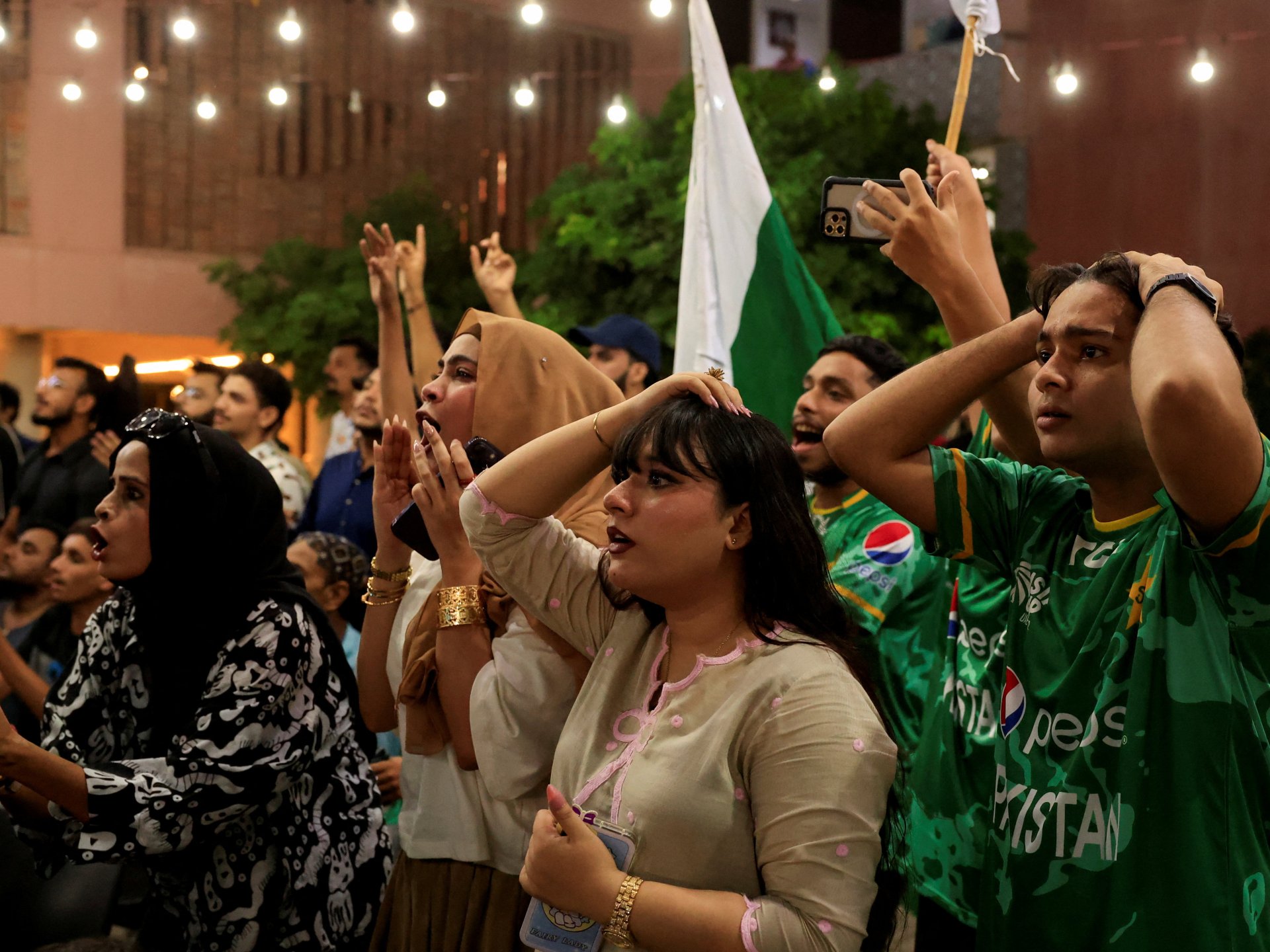
Pakistani fans watch their team take on India at a public screening in Karachi [File: Akhtar Soomro/Reuters]
When life comes to a standstill
When it comes to off-field behaviour, though, India’s trend of avoiding handshakes with Pakistani teams has been frowned upon.
“Politics should strictly be kept separate from sports,” a local cricket coach who requested anonymity said of Suryakumar Yadav and his team’s controversial actions from the Asia Cup last year.
“But if India takes that stance, Pakistan also needs to have some self-respect and respond accordingly,” the 46-year-old coach said.
Admittedly, the handshake row has taken centre stage in a fixture that has historically been remembered for scintillating bowling performances, swashbuckling innings or nail-biting finishes.
When Pakistan awakes on Sunday morning, most cricket fans will begin their day by playing their own cricket games – whether in narrow neighbourhood streets or vast, dusty fields hosting multiple matches simultaneously. As the evening draws closer, the clothes will be dusted off and equipment packed away for the showdown in Colombo.
Just as the hustle and bustle of life gave way for prayers two days earlier, the India-Pakistan match will do the same.
After all, it’s only cricket and Friday prayers that can bring life to a standstill in Pakistan.
