
Take heed to this text5 minutes
data
It’s not doable to interpret the Yemeni panorama solely by means of the lens of politics. The developments witnessed within the southern Yemeni governorates beneath authorities management in latest months clearly point out that safety and navy affairs have grow to be the decisive consider figuring out the course of energy on the bottom. Any governmental or political preparations will likely be unsustainable until the difficulty of safety management and the unification of navy command are resolved.
Nor can the escalating Saudi–Emirati rift between two allies who’ve militarily, politically and economically formed southern Yemen in recent times be ignored, given its direct impression on the stability of energy and stability.
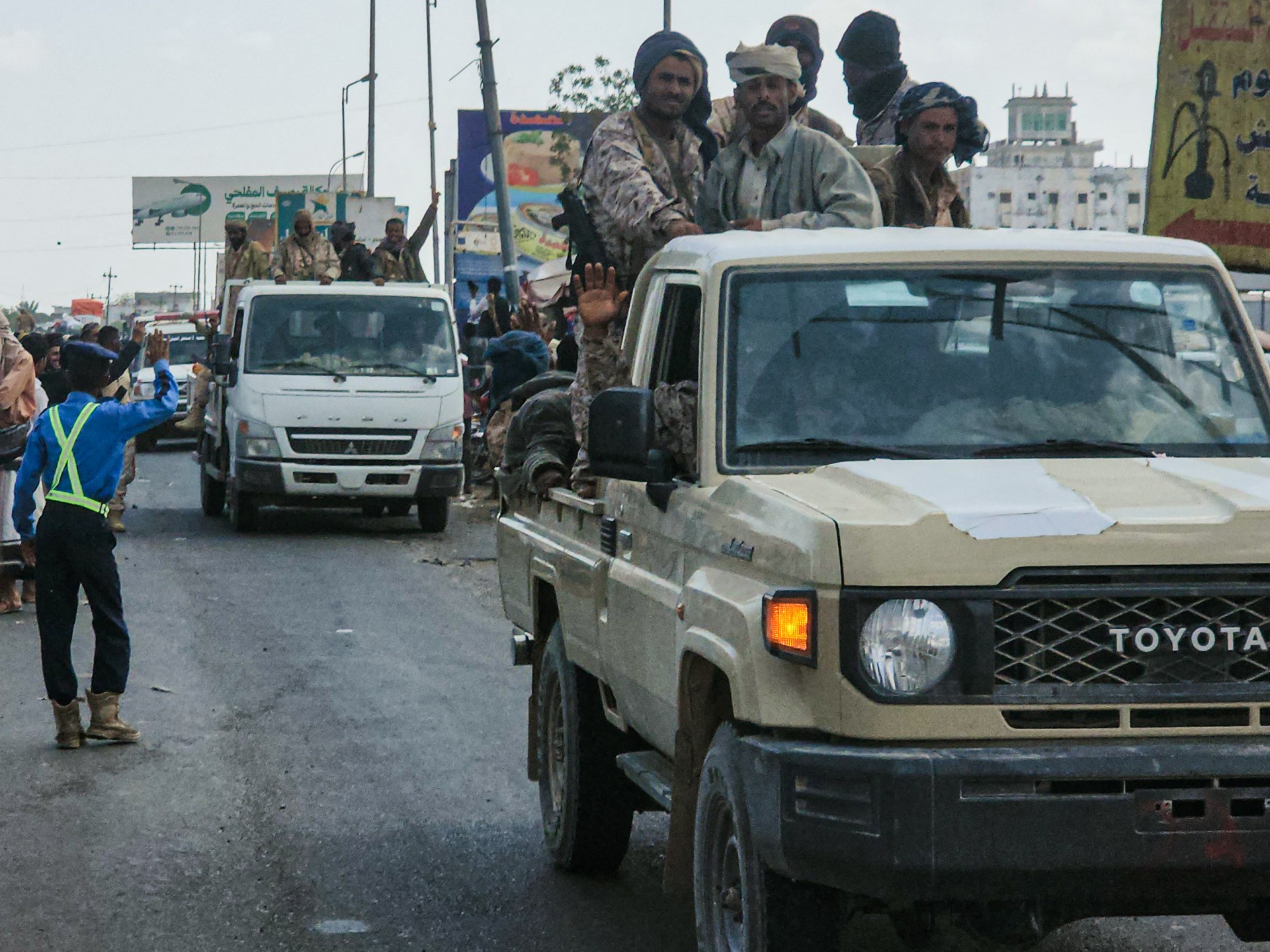
Over the previous years, a posh safety construction has taken form throughout the southern governorates, comprising official items and others that emerged in the course of the conflict. A few of these items are linked to state establishments, whereas others have been established with Emirati assist, such because the Southern Transitional Council’s forces, which quantity within the tens of hundreds, or by means of native preparations formed by the circumstances of the battle.
Though latest months have seen strikes to restructure this panorama following the defeat of the Southern Transitional Council (STC), which declared its dissolution in Hadhramaut and al-Mahra on January 3, 2026, safety management stays uneven from one governorate to a different. Moreover, the STC’s safety and navy formations haven’t disappeared solely; some have been redeployed, whereas the destiny of others stays unknown.
In Aden, the short-term capital, safety businesses function inside a posh construction. Some items previously affiliated with the STC have seen their personnel and weapons disappear, whereas others have been renamed or redeployed. Nonetheless, longstanding networks of affect stay, and the switch of management or redeployment of camps displays makes an attempt to rebalance energy fairly than a definitive decision of the scenario.
The identical applies, to various levels, to Lahij, Abyan, Dhale, Shabwah and Hadhramaut, the place the state’s capacity to say efficient authority varies, as does the extent of coordination between official safety forces and the formations that emerged in the course of the conflict.
Probably the most delicate challenge at this stage is the mixing of navy and safety formations into the Ministries of Defence and Inside. The state seeks to finish parallel safety authority, however the course of faces advanced challenges, together with differing sources of funding for some items, various political loyalties, fears amongst some commanders of shedding native affect, and concerns associated to the composition of those forces. Consequently, integration seems gradual, relying extra on redeployment and restructuring than on decisive measures that might danger triggering confrontation.
The federal government now primarily based in Aden, southern Yemen, finds itself going through a fragile equation: it should impose its safety authority with out plunging the nation into renewed inner battle.
The transition from a number of armed teams to a state monopoly on the usage of power requires political consensus, regional assist and worldwide backing. Any hasty transfer might reignite inner clashes, notably given present political and regional sensitivities, in addition to fears that the Saudi–Emirati dispute might as soon as once more set off confrontation on the bottom.
For that reason, authorities efforts are centered first on establishing a steady safety setting.
This trajectory can’t be understood with out contemplating the regional dimension. Saudi Arabia views Yemen as a direct strategic depth for its nationwide safety and seeks the emergence of a steady state alongside its southern border.
The dispute between Riyadh and Abu Dhabi, notably after Yemen requested the withdrawal of Emirati forces from its territory, has grow to be a big issue shaping the course of the disaster, particularly amid Saudi accusations that Abu Dhabi continues to assist the STC and consolidate its affect on the bottom.
Yemen right this moment is a part of a broader regional panorama, intertwined with Crimson Sea dynamics and maritime routes, competitors for affect within the Horn of Africa, and tensions stretching from Sudan to Somalia to the Gulf. For that reason, worldwide actors — notably the US — are eager to maintain the scenario in Yemen beneath management, fearing {that a} safety collapse might set off intra-Gulf battle, threaten worldwide transport, create area for a brand new wave of armed teams, or enable the Houthis to take advantage of the scenario.
Within the subsequent section, the federal government is prone to proceed efforts to consolidate safety management in Aden and different southern governorates, together with Hadhramaut, which borders Saudi Arabia, whereas step by step integrating navy items and sustaining political balances to forestall renewed battle.
The success of those efforts will decide whether or not the nation is shifting in direction of gradual stability or one other spherical of reshaping energy centres. Given this actuality, the central query stays: who actually possesses the flexibility to impose safety on the bottom, notably as some actors proceed to push the Southern Transitional Council in direction of escalation that might reignite the battle?
The views expressed on this article are the writer’s personal and don’t essentially replicate Al Jazeera’s editorial stance.
