
As native sugar cane farmers face rising sugar imports and international market pressures, the business prepares for Part 2 of the Sugarcane Worth Chain Grasp Plan. Chatting with Farmer’s Weekly, South African Sugar Affiliation executives replicate on Part 1 outcomes and description next-phase priorities.
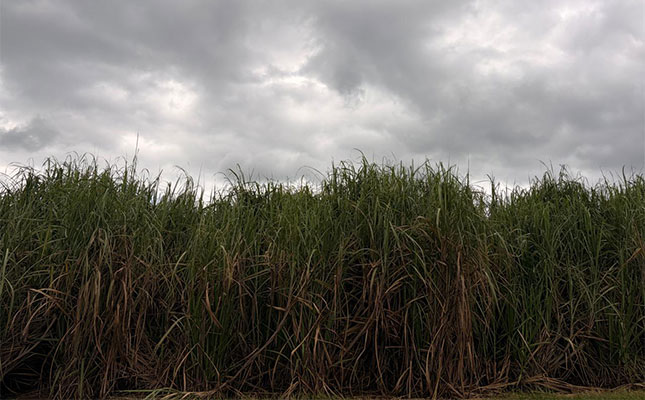
For each ton of sugar imported into South Africa, the native business loses round R7 500. Picture: Octavia Avesca Spandiel
– ADVERTISEMENT –
In line with Sifiso Mhlaba, CEO of the South African Sugar Affiliation (SASA), Part 1 achieved simply over 51% of its deliberate outputs between 2021 and 2023. A key goal was stabilising home sugar gross sales, which had fallen from 1,5 million tons to 1,2 million tons over a number of seasons earlier than the plan.
He added that this restoration was supported by a pricing restraint dedication, which restricted will increase to the patron value index, and by guaranteeing that downstream consumers sourced 95% of their sugar domestically. Mixed with commerce protections, these measures helped restore stability to the home market.
Diversification efforts, performed in partnership with the Industrial Improvement Company, initially thought-about greater than 50 different sugar cane merchandise, narrowing down to 5, together with sustainable aviation gasoline (SAF) and polylactic acid (PLA). Part 2 will deal with commercialising these improvements and exploring sustainable manufacturing pathways.
Different targets included sustaining a moratorium on the Well being Promotion Levy (HPL), South Africa’s tax on sugary drinks launched in 2018 to fight weight problems and non-communicable ailments, and guaranteeing authorities assist for the measure.
Growing imports and business displacement
Alongside Part 2 preparations, the business faces rising sugar imports. Kulani Siweya, nationwide market and commerce coverage govt at SASA, mentioned South Africa acquired 163 000t of sugar from nations like Brazil, India, Guatemala, Thailand, and Eswatini between April and December 2025, up 155% from the earlier yr.
“These imports are extremely subsidised, permitting overseas producers to export at costs under manufacturing prices,” he mentioned, including that each ton of imported sugar prices the native business R7 500 and displaces home manufacturing.
“This has already price the South African sugar business over a R 1 billion, ” he mentioned.
Siweya defined that South African producers nonetheless earn extra promoting domestically than exporting at world costs, which stay under manufacturing prices.
“Sustaining the scale of the [local] business by means of safety measures is important to preserving jobs and financial exercise,” he added.
To cushion the business, SASA is looking for a revision of the dollar-based reference value, which units a benchmark for sugar imports. The present benchmark, US$680/t (round R10 890/t) set in 2018, now not displays present prices. SASA has utilized to lift it to $905/t (R14 490/t).
“This safety will allow us to deal with the grasp plan commitments, accountable pricing, diversification, and transformation,” Siweya mentioned.
He added that unbiased evaluation signifies that the adjustment will end in solely a 0,3% improve in sugar costs for customers.
Part 2: getting ready for implementation
Mhlaba defined that Part 2 will streamline operations by means of 4 take a look at groups, down from 10 in Part 1, to enhance monitoring and analysis:
- Check Workforce 1: commerce and pricing points
- Check Workforce 2: small-scale grower assist
- Check Workforce 3: diversification efforts, together with SAF and PLA
- Check Workforce 4: meals coverage and HPL concerns
He added that transformation underpins the grasp plan, with R2 billion earmarked over 5 years for black and small-scale growers, guaranteeing job creation and retention.
🌾 Loved this text?
Get trusted farming information from Farmers Weekly in Google Prime Tales.
➕ Add Farmers Weekly to Google
✔ Takes 10 seconds · ✔ Take away anytime
