
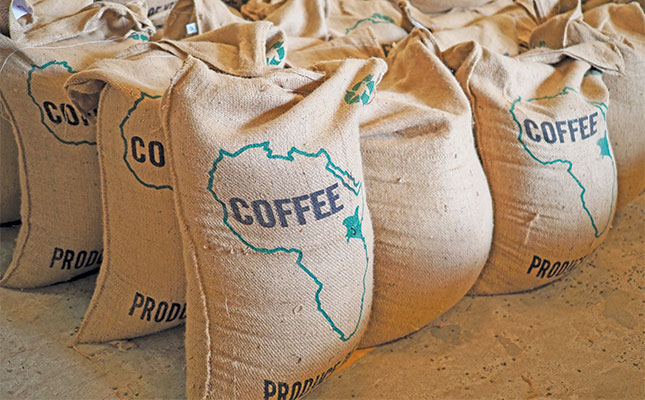
A group of Kenyan smallholder women farmers are transforming the country’s high-value coffee sector by pooling their resources.
Coffee is one of Kenya‘s most important export crops. Image: Wikimedia Commons
– ADVERTISEMENT –
When we drink coffee, we focus on the fragrant brew or the ritual of brewing a cup of coffee. Thinking about the global network of growers, pickers, roasters, and traders making our cup of coffee possible is most often very far removed from our thoughts.
In Kenya, coffee is an important component of the country’s economy and one of the top three export crops. The coffee industry provides employment to thousands of farmers and workers. About 60% of the best coffee in Kenya is produced by smallholder farmers, of which many are women. The coffee sector has, however, faced some challenges that particularly impacted women involved in the industry.
Women in coffee
On the highlands of the Great Rift Valley in Kenya a small shareholder women farmers’ group, North of the Rift Women in Coffee (NORT), is growing speciality single origin Arabica coffee. NORT is based in Trans-Nzoia County where agriculture is the main economic driver.
Speaking at the 2025 congress of the International Federation of Agricultural Journalists held in Nairobi, Kenya, from 15 to 18 October, and hosted by Media for Environment, Science, Health and Agriculture, Christine Masta, communications, public and government affairs manager at BASF in Kenya, said BASF was working with NORT to improve women’s economic participation along the coffee value chain.
Christine Masta, communication, public and government affairs manager at BASF in Kenya, said at the 2025 IFAJ congress held in Nairobi, Kenya, that BASF is pursuing safe and sustainable agricultural production systems. Supporting the North of the Rift Women in Coffee group is part of that focus.
“This group of women is transforming Kenya’s coffee industry by pooling their resources. Through their collaboration, they are challenging traditional barriers in the industry and redefining the role of women.
“By promoting best practices and providing training in agricultural knowledge, services, and markets, BASF is equipping women coffee farmers with the tools they need to thrive and to open up new opportunities,” Masta stated.
This is especially important, taking into account the current challenges, she added.
“There are economic turbulences in the market at present. One can almost say that every week there are new challenges that farmers have to deal with. These include global challenges like climate change, but also more local challenges such as gaining market access.
“Women farmers in Africa face significant challenges, including a lack of access to land, financing and technology. They have limited education and training opportunities and have heavy workloads due to the combination of household and farming responsibilities. These barriers limit their productivity, economic well-being, and ability to adapt to climate change,” Masta said.
She added that BASF is partnering with NORT in a shared effort to strengthen the role of women in the coffee sector.
“This collaboration marks a significant step toward expanding economic opportunities for women across our region. Through a signed memorandum of understanding, over 300 women coffee farmers under the NORT network will gain access to targeted training in good agricultural practices, product stewardship, crop and farmer safety, quality control, and value adding.”
Centre of Excellence
BASF is involved in a centre of excellence in the area. The aim of the BASF/NORT Centre collaboration is to offer various training and knowledge exchange workshops that are open to all farmers from the area.
“The facility will concentrate on expertise, resources, and best practices in coffee farming to drive innovation, standardisation, and efficiency. By acting as a knowledge hub, it provides leadership, guidance and support, ultimately helping to improve performance, and facilitate the adoption of new technologies and processes with the aim of promoting sustainability in coffee production, ” Masta said.
She explained that in addition to the centre of excellence, BASF financed and facilitated the construction of a coffee milling warehouse as well as a coffee drying greenhouse.
“This is critical infrastructure that will allow the farmers to meet international standards as well as to negotiate for premium prices in global markets.”
The coffee drying greenhouse, also known as a solar dryer, is used to remove moisture from coffee beans in a controlled environment using solar energy, which enhances coffee quality, prevents spoilage from rain or mould, and offers a more efficient and environmentally friendly alternative to traditional open-air sun drying.
The coffee milling factory will process harvested coffee cherries into green coffee beans by removing the outer layers. The process includes pulping, drying, hulling and grading, as well as sorting to prepare the beans for export. The purpose is to ensure a uniform high-quality product. This will be accessible to other farmers in the community as well.
“The mill will play a significant role in determining the final taste and quality of the coffee,” she said.
According to Masta, the women are driving sustainability from farm to cup and deliver traceable, high-quality coffee to markets in Europe, particularly the Netherlands.
Jane Kamau, WanRich Coffee Farm director, noted that for NORT it is more than just coffee.
Jane Kamau (left), WanRich Coffee Farm director, and Gloria Gummerus from Sakami Farm are both members of the North of the Rift Women in Coffee group, and explained to delegates how founding NORT helped them overcome difficulties in the coffee market.
“It is about equipping women with the tools, knowledge, and systems they need to build a sustainable farming business and take ownership of their economic future.”
Kamau left the banking industry to produce coffee. “NORT is a women-focused small-shareholder farmers’ group. We stand together to help each other to build profitable businesses.
“We are agripreneurs who formed an association. We want to make money and transform lives,” she told delegates at the congress.
Gloria Gummerus is from Sakami Farm located in Berbeton at the foot of Mt Elgon. She said the rich organic soils in the area and surrounding hills form the ideal environment for coffee production.
“I wanted to get a partner who wanted to buy coffee. I looked for like-minded ladies, those who have the same values and that I know will walk this journey with me. I found Jane Kamau.”
Some of the NORT partners include:
- Samaki Farm, where Gloria and Jarmo Gummerus farm, is located in Berbeton at an altitude of 1 800m above sea level. The farm is situated on rich volcanic soil, and with the favourable tropical climate and enough fresh water flowing from underground springs and rivers, the conditions are ideal for the production of Arabica coffee, Hass avocados, and macadamias. Sakami also practises apiculture, keeping bees for honey and pollinating the flowering plants.
- WanRich Coffee Investments is a family-owned, women-led specialty coffee estate in Kenya’s Trans-Nzoia County. The business was founded in 2015, and at 1 800m above sea level grows the Batian, Ruiru II, Ruiru Grafted, and SL28 coffee varieties. Jane Kamau from WanRich says they specialise in washed, anaerobic, and natural processes.
- Chepsangor Hills Coffee is situated in the Nandi Hills in Kenya and is an umbrella organisation that manages the coffee ecosystem in the area with a commitment to sustainability. Dr Rosabella Langat says the company connects growers and consumers, offering a rich taste of Kenya through specialty coffees while empowering local communities socially, environmentally, and economically.
- Rimo Coffee, where Irene Kligen is now the director, was established in 1988 and evolved from maize farming to coffee cultivation in pursuit of prosperity.
Samwa Coffee. Once a medic, Susan Mwhihaki turned to farming, reviving her family’s coffee legacy and pioneering new techniques that earned her farm model status in her community. - Sarini Coffee Estate. Vivin Lugalia and her three children are the proud owners of Sarini Coffee Estate.
- Mary and Anne Tonje from Tonje Coffee Estate in Kitale. The business was started by their mother Mary who passed away recently. The family has set up a nursery where they distribute different varietals and make coffee farming attractive for the youth in the region.
For more information visit nortwomen.org.
🌾 Enjoyed this article?
Get trusted farming news from Farmers Weekly in Google Top Stories.
➕ Add Farmers Weekly to Google
✔ Takes 10 seconds · ✔ Remove anytime
